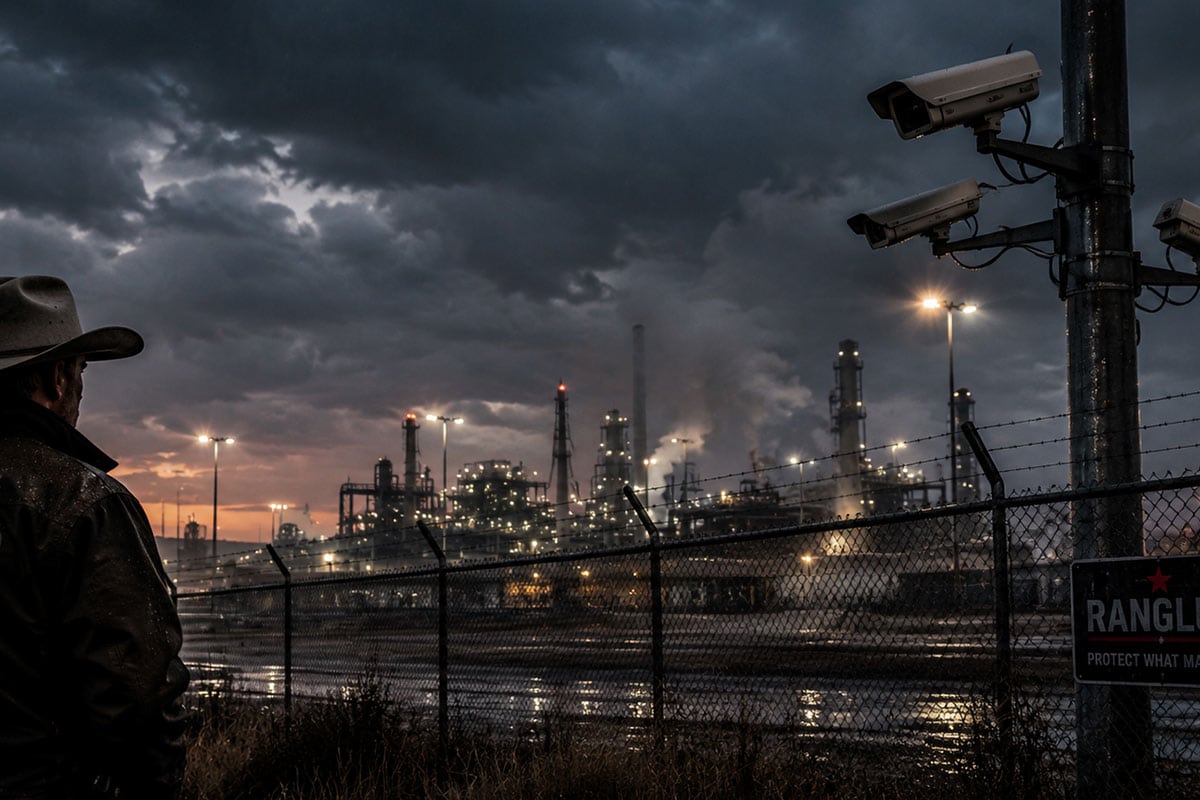
Are Security Cameras Enough to Protect Your Business?
- Cameras create evidence. They do not stop the damage.
- Recording a crime is not the same as preventing one.
- Real protection comes from cameras, monitoring, deterrence, and response working together.
Most businesses think cameras mean protection.
They don’t.
Cameras create evidence. They do not stop theft, vandalism, or intrusion.
Recording a crime is not the same as preventing one.
Real security happens when cameras, monitoring, deterrence, and response work together.
If nobody is watching, nobody is responding, and nobody can intervene, you do not have protection.
You have footage.
That distinction costs businesses more than they realize.
Q. Aren’t security cameras enough if they capture what happened?
A. Usually, no. Cameras create visibility, but visibility alone does not create security. A recorded break-in may help explain what happened, but it does not stop stolen inventory, repair damaged property, or prevent the same criminal from returning. Security begins when detection leads to interruption, not when footage gets reviewed after the fact.
Cameras create visibility. Protection requires interruption.
Why Security Cameras Don’t Stop Crime on Their Own
Ownership is not readiness.
Owning a gun does not protect you if there is no ammo.
It does not help if you do not know how to use it.
It does not help if nobody is prepared to respond when the moment comes.
Security cameras work the same way.
A business installs cameras and feels safe.
But the real questions are different.
Is the system outdated?
Does it actually work?
Can it capture forensic-quality evidence?
Is someone monitoring it in real time?
Can someone intervene before the situation gets worse?
If the answer is no, the system is not protection.
It is a relic hanging on the wall.
Many businesses are not protected.
They are just recorded.
That distinction matters more than most owners realize.
Because criminals do not fear equipment.
They fear interruption.
The real value is not the camera.
It is what happens because of the camera.
A camera system without response is documentation, not defense.
Q. What actually makes criminals back off: cameras or something else?
A. It is rarely the camera itself. Criminals do not fear equipment mounted on a wall. They fear interruption. Live monitoring, active deterrence, talk-down systems, lighting, and immediate response create uncertainty and risk for the intruder. That is what changes behavior. The camera is only valuable when it triggers action.
Criminals do not fear cameras. They fear interruption.
The Difference Between Detection & Real Protection
Most security systems are built for hindsight.
That is the problem.
Recording an incident after it happens is useful for paperwork.
It is not useful for prevention.
By the time law enforcement reviews footage, the damage is already done.
The theft happened.
The vandalism happened.
The trespasser is gone.
And often, the footage does not help much anyway.
It is too grainy.
The angle is poor.
The recording system failed.
The face is unclear.
The vehicle plate is unreadable.
Now, the business owner is holding blurry footage and hoping someone can do something with it.
Usually, the answer is frustrating.
Good luck.
Evidence matters.
But prevention matters more.
Most businesses invest heavily in proof and almost nothing in interruption.
That creates a dangerous false sense of security.
The goal should never be better footage after the crime.
The goal should be intercepting the crime before it even begins.
If your system only helps after the event, it is already too late.
Q. What is the difference between detection and real protection?
A. Detection tells you something happened. Protection changes the outcome. Most systems are built for hindsight, focused on footage, reports, and insurance claims. The best systems are built for prevention. The goal isn’t clearer evidence after the theft. The goal is stopping the theft before it finishes, through detection, disruption, and deterrence.
In essence, detection reports the problem. Protection interrupts, disrupts, and deters it.
Why Most Business Security Camera Systems Fail
Most failures are not dramatic.
They are quiet.
They happen in assumptions.
“We have cameras, so we’re covered.”
That sentence causes more security problems than most people realize.
The issue is usually one of three things.
Old equipment.
Weak recording systems.
Or nobody watching.
Older cameras create poor forensic value.
Low-resolution footage cannot identify people clearly.
Businesses often care more about having cameras than whether those cameras can actually help.
That is backwards.
Most commercial systems should be updated every three to five years.
At minimum, businesses need clear forensic-quality footage, usually starting around strong 1080p to 2K quality, depending on the environment.
Then there is the recording system.
A weak video management system turns good cameras into bad evidence.
Playback is clunky.
Frames are hard to capture.
Storage fails.
Law enforcement cannot use what they need.
The final problem is the biggest one.
Nobody is watching.
Recording alone is passive.
If nobody sees the issue in real time, there is no early warning.
There is no intervention.
There is only delayed discovery.
That is not security.
That is surveillance after the fact.
Most camera systems fail because they were installed to feel safe, not to create control.
Q. How do I know if my business security camera system is outdated?
A. Usually, the answer shows up when footage is needed most. Grainy images, unreadable license plates, poor nighttime visibility, weak playback systems, and storage failures all signal a system built for appearance rather than protection. If law enforcement cannot use the footage, or if nobody can respond in real time, the system is already failing its job.
This explains why outdated surveillance creates confidence without creating control.
What Actually Prevents Crime at a Commercial Property
Real protection comes from layers, physical and digital. Defense in depth.
Not gadgets.
Not one vendor promise.
Not more cameras on more walls.
Security works when visibility, intelligence, people, and deterrence operate together.
That is where businesses finally move from watching problems to preventing them.
It starts with good cameras.
Not old equipment.
Not cheap installs.
Not cameras chosen because they were convenient.
Clear video matters.
Forensic detail matters.
Sound capture matters where it is relevant.
And the infrastructure must support analytics, not just storage.
Then comes analytics and AI.
This is where security shifts from passive to proactive.
Behavioral analytics can flag unusual movement.
Facial recognition can reduce uncertainty.
Automated alerts create faster awareness.
Early warning is more valuable than perfect evidence later.
But technology alone still is not enough.
There must be a human in the loop.
People create judgment.
People verify risk.
People decide when intervention matters.
Analytics support people.
They do not replace them.
Q. Does AI replace human security teams in modern business security?
A. Usually, it does the opposite. Good analytics reduce noise and create faster awareness, but judgment still belongs to people. Someone still needs to verify the threat, decide whether intervention is necessary, and act before escalation. Technology improves speed. People create control.
Then comes deterrence.
Lights.
Speakers.
Talk-down systems.
Immediate warnings that tell someone they have been seen.
“Restricted area. Leave the property now.”
Most criminals do not want confrontation.
They want opportunity.
Deterrence removes opportunity.
And prevention will always outperform prosecution.
The best security systems do not just watch crime. They make crime harder to attempt.
The core idea is simple: Prevention beats documentation every time.
Prevention outperforms prosecution.
What Does a Complete Business Security System Look Like?
No single piece can stand alone.
Not cameras.
Not AI.
Not guards.
Not alarms.
Security fails when businesses treat these as separate purchases instead of one connected system. Your tools support your systems. Your systems become a proactively monitored platform.
Infrastructure without intelligence fails.
Intelligence without response fails.
Response without leadership fails.
Everything must work together.
That is what real protection looks like.
Cameras support protection.
They do not replace it.
Detection helps.
But detection is only one part of the job.
The businesses that stay safest understand one simple truth:
You are not buying cameras.
You are buying time, intervention, and control.
And those only happen when the full system is synchronized.
Because evidence after the fact is not security.
Prevention is.
Additional FAQ
Q. Are security cameras enough to protect a business?
A. No. Cameras create visibility, but they do not create intervention on their own. Without monitoring, deterrence, and response, cameras mostly serve as evidence after damage has already happened. Real protection requires a system built to interrupt problems, not just record them.
Q. How often should commercial security cameras be upgraded?
A. Most commercial systems should be evaluated regularly and often updated every three to five years, depending on the environment and risk level. Older systems often fail because image quality, storage reliability, and forensic usefulness no longer meet practical security needs.
Q. What is forensic-quality video in commercial security?
A. Forensic-quality video means footage clear enough to identify faces, license plates, movement patterns, and critical details law enforcement can actually use. Poor resolution creates false confidence because the system exists, but the evidence is unusable when needed.
Q. Why does live monitoring matter more than recording alone?
A. Because prevention depends on timing. Recording tells you what happened after the fact. Live monitoring creates the opportunity to intervene while the situation is still unfolding. That difference is where real security exists.
Q. What is the best security setup for a commercial property?
A. The strongest systems use layers: strong cameras, reliable recording infrastructure, analytics, live monitoring, trained human response, lighting, access control, and active deterrence. Security works best when these pieces operate as one connected system instead of separate purchases.
Q. What do criminals actually fear?
A. Not cameras. Interruption.
Most criminals avoid confrontation. They want opportunity, not resistance. Live monitoring, lighting, speakers, talk-down systems, and visible response remove that opportunity and increase perceived risk.