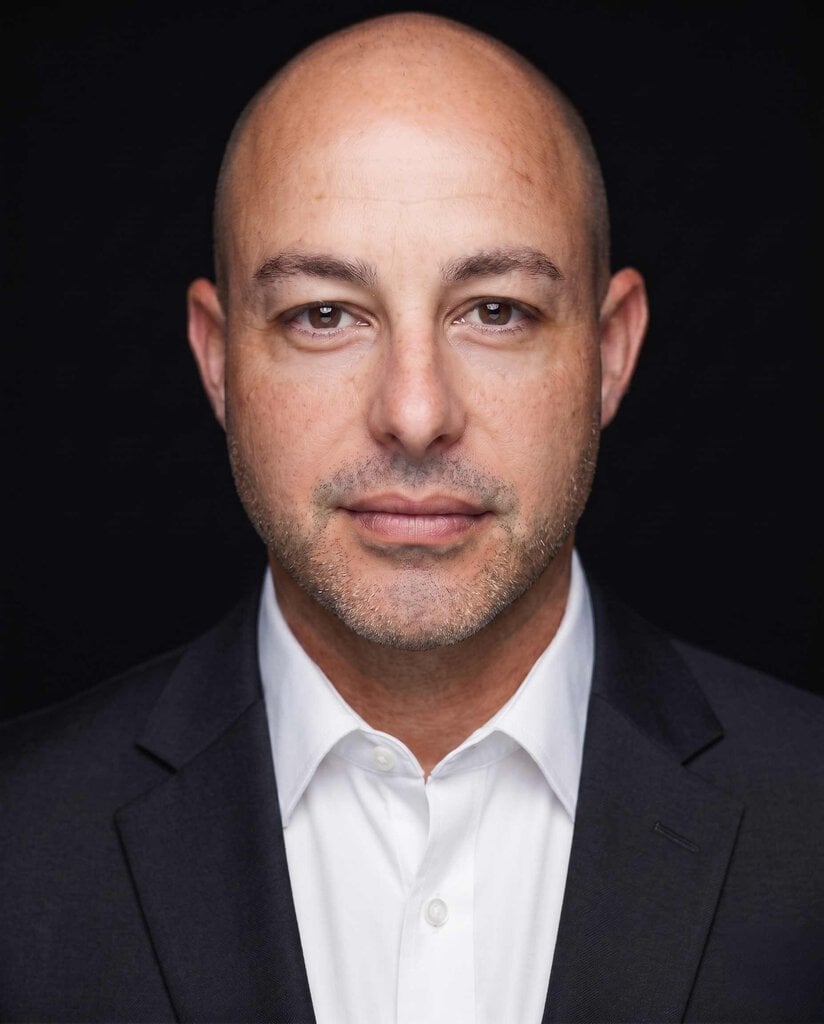
Christian Petrou
Co-Founder
Christian Petrou approaches protection the same way he approaches infrastructure, operations, and business continuity: Systems only matter if they still work under pressure.
Before co-founding RANGLUR, Christian was working in large-scale hospitality and operational environments where surveillance, networking, access control, and real-time decision-making all had to function together. As the industry transitioned from analog camera systems to IP-based infrastructure, he became known for solving problems that sat between disciplines. His focus shifted to technical failures, workflow failures, communication failures, and human failures that most companies treated as separate issues.
That perspective shaped the way he thinks today.
In Christian’s view, most protection failures are not caused by a lack of technology. They come from false confidence, weak processes, poor training, and organizations relying on systems nobody’s tested in the real world.
A camera does not create protection.
Analytics do not create awareness.
Software does not create preparedness.
Technology only amplifies the quality of the people, workflows, and decision-making behind it.
That philosophy became the foundation for how RANGLUR operates.
Rather than approaching protection as a collection of products, Christian focuses on operational behavior, pattern recognition, and practical resilience. He believes the biggest vulnerabilities are often the ones businesses normalize over time. Poorly trained teams, fragmented communication, unchecked assumptions, internal threats, and systems that appear effective until something serious actually happens.
Over the years, he’s worked through countless real-world incidents where the gap between “installed” and “prepared” became painfully obvious. In many cases, the technology itself was functioning exactly as designed. The failure came from the people operating it, the lack of context around it, or the absence of clear workflows when pressure entered the equation.
That’s why RANGLUR spends as much time focusing on process, escalation paths, operational visibility, and human behavior as it does cameras, analytics, or monitoring systems.
Christian is also deeply skeptical of security theater—systems designed to create the appearance of safety without meaningfully reducing risk.
He’s spent years testing analytics platforms, workflows, monitoring structures, and operational models in live environments. He rejects solutions that look impressive in demonstrations but fail under real-world conditions. His standard is simple: If it wouldn’t protect his own people, his own family, or his own business, it does not belong in a client environment.
That mindset also shaped one of RANGLUR’s core operating principles: Clients should never be trapped inside proprietary systems or vendor lock-in. RANGLUR designs open architecture environments that clients fully control, allowing them to scale, adapt, and evolve as technology changes over time.
For Christian, protection isn’t about reacting after something escalates. It is about recognizing patterns early, reducing operational friction, strengthening decision-making, and helping organizations stay focused on what they do best before disruption takes control.
The businesses that tend to align most with RANGLUR are operators who take pride in what they’ve built and understand that resilience is not a list of boxes to check. It is an ongoing discipline.
Christian’s approach remains grounded in a simple personal principle that has guided him throughout his career: Leave people, systems, and environments better than you found them.

Todd Martin
Co-Founder
Todd Martin believes protection starts long before something bad happens.
As co-founder of RANGLUR, his approach is shaped by decades spent operating in environments where hesitation, complacency, and poor preparation carried real consequences. His background includes military intelligence work, undercover operations, violent crime investigations, and leadership roles within the Texas Rangers Special Operations Group. He’s served in both operational and command capacities during some of the highest-risk situations law enforcement officers can encounter.
Over the course of his career, Todd learned a simple reality: Most people misunderstand protection because they consider it only after failure has already occurred.
They see the aftermath.
He spent years seeing the warning signs before it happened.
That perspective fundamentally shaped the way he approaches resilience and proactive protection today.
During his career, Todd developed a deep understanding of how threats form, how people behave under pressure, and how small gaps become catastrophic failures when nobody addresses them early. He also learned that experience matters more than theory.
You can study procedures.
You can rehearse scenarios.
You can talk through plans in a classroom.
But until pressure arrives, most people don’t truly know whether their systems, communication, or leadership will hold together.
As Todd often says, “You don’t train until you get it right. You train until you can’t get it wrong.”
That mindset became foundational to RANGLUR.
Rather than treating protection as a reactive security function, Todd believes organizations must build layered systems that identify threats early, create time to respond, and reduce the chance of escalation before innocent people are placed at risk.
In his view, many companies unknowingly build their entire protection posture around reaction.
Their security starts at the front door.
Their cameras exist only to review incidents after the fact.
Their personnel are undertrained.
Their workflows are fragmented.
And leadership often assumes visible security measures automatically mean effective protection.
Todd disagrees with that philosophy.
He believes resilience is built through preparation, layered visibility, communication, accountability, and proactive decision-making long before a crisis unfolds. That includes understanding human behavior, identifying operational blind spots, and building systems capable of absorbing stress instead of collapsing under it.
Much of his work today focuses on helping organizations recognize vulnerabilities they have normalized over time. His approach addresses complacency, poor coordination, reactive thinking, internal breakdowns, and the dangerous assumption that “it probably won’t happen here.”
Todd is deeply focused on leadership responsibility.
He believes protecting people, businesses, and environments requires more than technology or policies alone. It requires leaders willing to think ahead, ask difficult questions, and build cultures where preparedness becomes part of daily operations rather than an afterthought triggered by crisis.
That philosophy continues to guide the way RANGLUR operates today.
For Todd, the goal has never been security theater, fear, or appearances. It’s helping organizations build environments capable of protecting what matters most before disruption reaches the people inside them.
At the center of that mission is a principle that has followed him throughout both public service and private leadership: If you have the ability to protect people, improve systems, and leave environments better than you found them… you carry the responsibility to do so.