Victorian homes were decorated with poison.
The most fashionable wallpaper of the era carried arsenic. The color held. The vapor did not.
Occupants sickened slowly. No one connected the room to the illness.
The threat was invisible. It was also constant.
Some conditions have not changed.
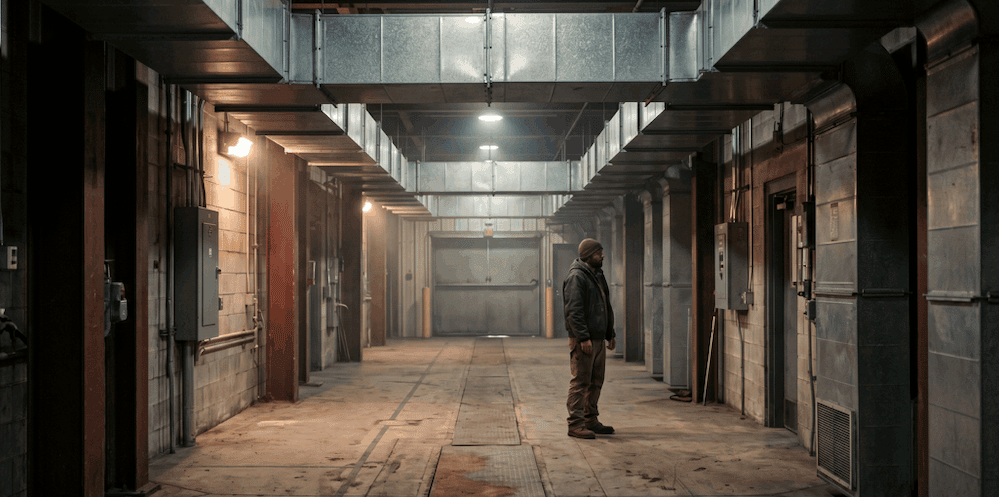
The modern facility carries hazards that leave no mark until they accumulate.
An HVAC failure degrades air quality before anyone notices the air.
Chemical off-gassing moves through sealed spaces.
Heat load rises and, with it, the rate of error and injury.
Wildfire smoke enters through systems built to keep it out.
None of this announces itself. That is the point.
The Victorian occupant had no instrument to read the wall. The hazard was legible only in hindsight.
That gap has closed.
Sensor networks read the air in real time. Detection now precedes consequence.
The threat was never the variable. Visibility was.
A facility does not turn hazardous overnight. It accumulates exposure while the metrics still read normal.
This becomes relevant once a site reaches the scale where one undetected failure carries enterprise consequences. Below that threshold, the older posture holds.
After that point, the question is no longer whether the hazard exists. It is the one who saw it first.
RANGLUR · RANGEREADY · Protection Technology
Protection by Design, Not Chance