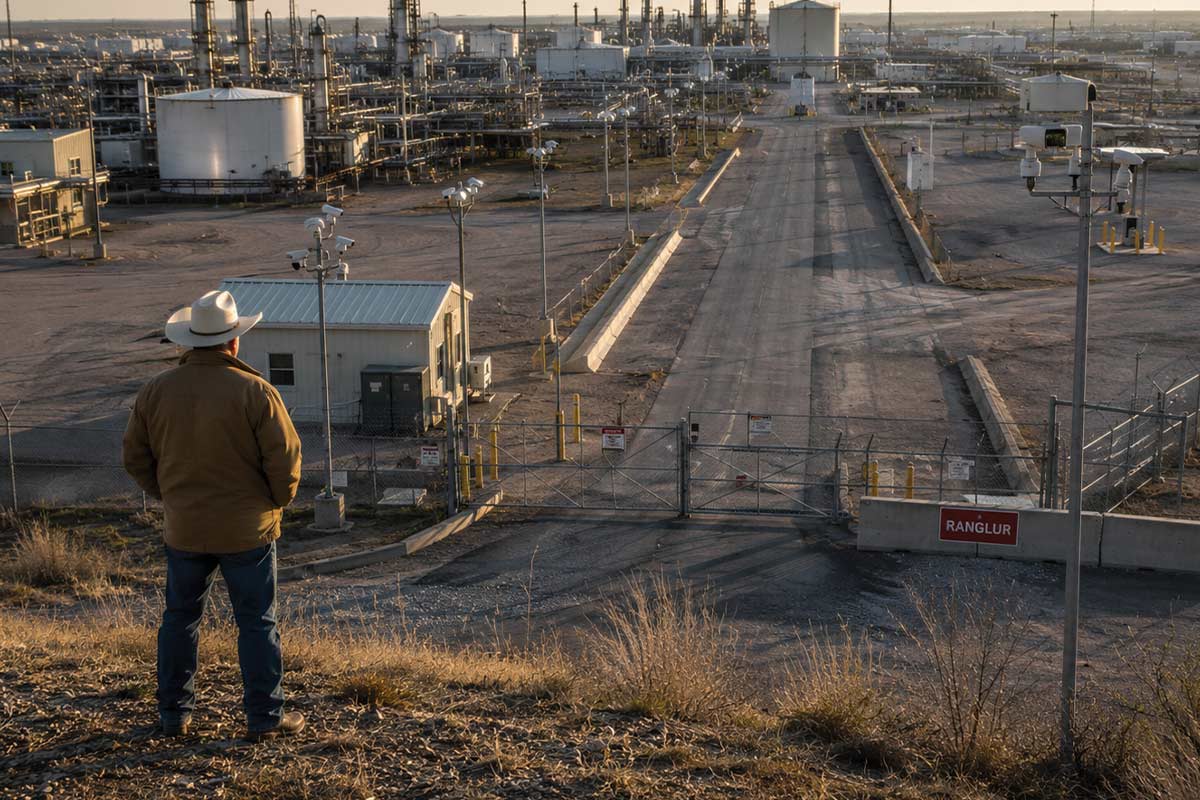
Why Security Systems Fail Before You Ever See It Coming
The biggest problem with most facilities isn’t that they’re undersecured. It’s that they’re unprepared in ways nobody’s actually tested.
- Cameras don’t stop anything. They only record it.
- Guards can’t be everywhere, and most weren’t trained to be proactive in the first place.
- The real question isn’t how likely an incident is. It’s what happens if it lands.
You have cameras. You have guards. You have access control at the door. And you still can’t answer the one question that matters: what happens the moment something goes wrong.
The problem is more widespread than you might think. While most facilities have installed protection, few have tested whether it actually holds.
Why Does Traditional Security Keep Failing?
Security, as most facilities practice it, is built to react. Cameras record an incident. Guards respond to one. Access logs tell you who came through the door after the fact.
None of that gives you a warning before something happens. It gives you a record of what already did.
That’s the real failure. Not a missing camera or an undertrained guard, but a structure that was never built to see a threat coming. You get no early warning, so you’re always managing the incident instead of preventing it.
Q. Why is facility security always reactive instead of proactive?
A. Because most security tools are built to record an incident or respond to one, not to catch the conditions that lead to it. There’s no early warning built in, so you’re always managing what already happened.
Where Do Cameras, Guards, and Access Control Actually Fail?
Cameras observe. That’s the entire function. Someone has to be watching in real time, reviewing the footage later, or paying a monitoring service to do either. Left alone, a camera gives you seconds to minutes of warning at best, and only if someone happens to be looking.
Guards carry the same limitation, just with a bigger price tag. A trained, skilled guard can make a real difference. Most aren’t. They can’t cover every angle of a facility at once, they’re one of the most expensive line items in the budget, and a large share of them are watching their phone instead of the property.
Guard qualification varies more than most facility leaders realize. In Texas, unarmed guards sit at one licensing tier, armed guards at another, and personal protection for executives, usually staffed by experienced private protection officers, former military or law enforcement who served in this capacity, sits well above both. Most facilities are paying for a tier that was only ever built to check people in and out, not to spot a threat forming.
Access control has its own problem. A badge or a code only verifies that someone has the badge or the code. It doesn’t verify who they actually are. The only real solution pairs the technology with a person watching it happen, and that combination is rare at most locations.
Every one of these tools does exactly what it was designed to do. None of them were designed to get ahead of anything.
Q. Do security cameras actually stop anything from happening?
A. No. Cameras only observe and record. At best, they give you an early warning of seconds to minutes, and only if someone happens to be watching in real time.
Why Do Facilities Keep Buying Security That Doesn’t Work?
If none of this works the way facilities assume, why does the same model keep getting purchased?
Because most vendors aren’t selling a solution to your specific exposure. They’re selling a product off the shelf, and they don’t need to understand your facility to close that sale.
And the people responsible for making the buying decision often don’t have a way to evaluate what they’re being sold. A lot of facility protection leads came up through law enforcement, and that background teaches you to enforce the law after something happens. It doesn’t always teach you how to prevent a threat from developing in the first place. Those are different skill sets, and most facilities never notice the gap until it’s already cost them something.
So the purchase becomes a box to check. Cameras get installed. A guard gets posted. Everyone feels covered, and nobody has actually tested whether any of it functions as a system.
Q. Why do facilities keep buying security that doesn’t actually work?
A. Because most vendors are selling a product, not a solution, and most facility leads don’t have a way to evaluate what they’re being sold against their actual exposure.
How Do You Actually Assess Facility Risk?
Before you can fix these issues, you have to know where your actual exposure lives, and that means running the numbers, not just trusting your gut.
Every threat a facility faces breaks down into two basic variables: how often it happens, and how bad it is when it does.
A threat that happens constantly but causes little to no damage may not be worth spending on at all. A threat that’s rare but catastrophic if it lands is the one that should be keeping you up. And a threat that sits in the middle, low frequency but a bad outcome, is exactly where leadership judgment has to step in and decide what exposure is actually worth protecting against.
That’s the assessment traditional security skips entirely. It treats every threat the same. Worse, it treats the ones you can see—a broken lock, a missing camera—as more urgent than the ones you can’t—an unmonitored environmental sensor, a facility with zero early warning for a fast-moving threat.
Q. How do you decide which facility risks are actually worth spending on?
A. Weigh frequency against severity. A threat that happens often but causes little damage may not be worth acting on. A threat that’s rare but catastrophic almost always is.
What Does Real Protection Leadership Actually Look Like?
The people who fix this problem aren’t coming from a background that only trained them to respond after the fact. The strongest protection leads tend to come out of military or special operations environments, places where the entire job was staying ahead of a threat, not writing a report about one.
That background builds a different instinct. You train the response until it’s not a decision anymore, it’s muscle memory. You develop the competency to know what you actually understand and say plainly when you don’t. And you build the standing to tell leadership something is wrong before it becomes a headline, then help them fix it.
That’s a different posture than checking badges at a door. It’s oversight that never turns off, applied by someone who’s already seen the cost of mistaking “installed” for “prepared.”
Q. What background actually prepares someone to lead facility protection?
A. Experience operating inside chaotic, high-consequence environments, most commonly military or special operations, where staying ahead of a threat was the entire job, not just responding after one.
The Only Question That Actually Matters
The question was never whether your facility has protection in place. It’s whether that protection has ever been tested against what you’re actually exposed to.
Most facilities can’t answer that question, because nobody has run the assessment. They’ve bought the cameras, hired the guards, and installed the access control, and confused all of it for a system.
It isn’t one until someone examines it as a whole, and stays to make sure it keeps working.
Q. How do I know if my facility’s protection actually works?
A. Test it as a system, and system it into a platform, rather than a set of individual and siloed tools. Assess your real exposure against frequency and severity, then confirm someone is overseeing it on an ongoing basis instead of walking away after installation.