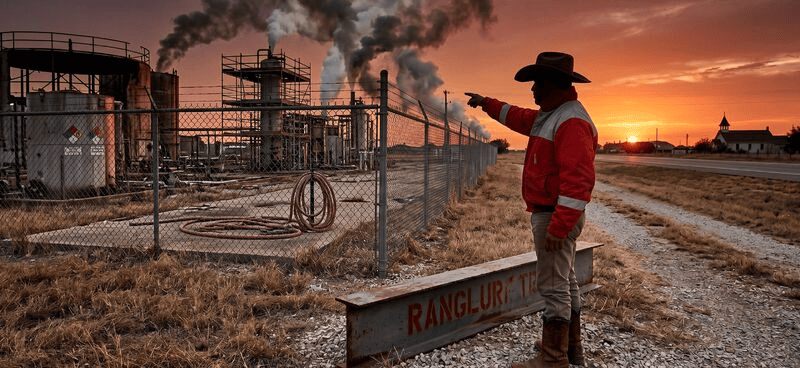
Workers tragically died in West Virginia last week.
We learned a plant had entered decommissioning. A tank-cleaning crew mixed nitric acid with another reagent. Hydrogen sulfide was formed in seconds.
Shutdown is one of the most exposed moments in a facility’s life. Discipline thins. Margins compress. Crews shorten procedures to finish the job.
This is when reactive postures fail. The walls still stand. The sensors still register. The system has already lost containment.
Physical protection can never be the absence of an incident. The architecture itself determines how an incident propagates or doesn’t.
For this incident, the fumes stayed inside one building. That detail matters. A boundary held. The plume did not reach the school, the highway, or the river crossing. That is the line between a fatal accident and a regional event.
EMS responders required treatment. Responders are part of the protected asset, not separate from it. Architecture that assumes otherwise has already failed.
The external critical assets held by others extend past the fence line. The school. The route. The water. The neighboring operator downstream. Each is a node in the same resilience network.
Decommissioning is not closure. It is the highest-risk operating state a facility ever enters. Protection requirements rise as the asset winds down, not the other way around.
Where does shutdown logic still depend on human shortcuts?
The enterprise will always be responsible for choosing if this conversation is unnecessary. Above it, the architecture is already overdue.
Protection by Design, Not Chance