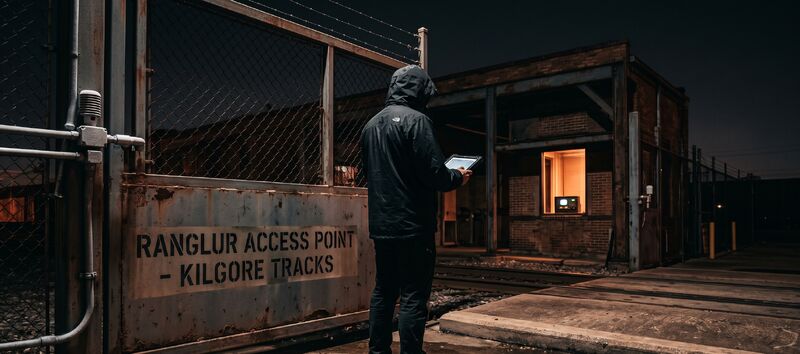
A camera tells you what happened. Telemetry tells you what is happening.
Most sites confuse the two.
Footage exists. Sensors are installed. A dashboard glows in a room no one watches. The site looks covered.
Covered is not monitored.
The recording answers questions after the loss. It is evidence, not awareness.
By the time someone reviews it, the window to act has closed.
That is the cost of latency.
Latency is the time between a change and the moment anyone knows about it. A door forced at 2 a.m. A pump failing in a cold snap. A perimeter crossed while the screen sat dark.
The event is not the exposure. The delay is.
Telemetry removes the delay. The site reports its own condition, continuously.
Movement, access, temperature, and environment are all read in real time, not recovered after.
This shifts the posture. Reactive becomes anticipatory. Fewer explanations after the fact. Fewer surprises.
Above a certain threshold, assumption becomes the weakest layer in the system.
At that point, the question is not whether the site is watched. It is whether the site can tell you what it sees.
A sensor reporting into an empty room is just a faster camera. Telemetry closes the delay between change and awareness. It does not close the gap between awareness and action. That second gap is its own latency, and it is the one most sites never think to measure.
The signal has to land somewhere. Someone, or something, is positioned to read it and move. Otherwise, the site is talking to a wall in real time instead of in playback.
Continuous awareness is the floor. Synchronized response is the structure. Build both, or you have bought speed you cannot spend.
Protection by Design, not Chance.