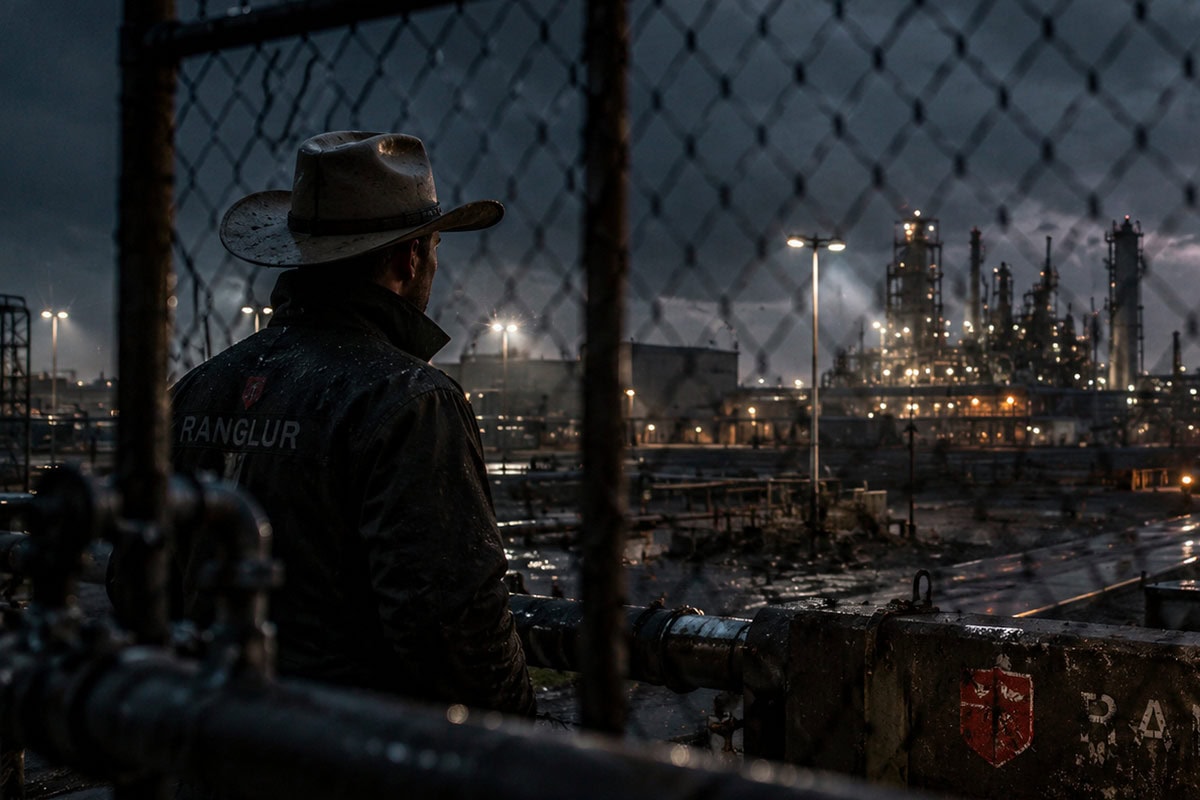
It’s not a lack of security. It’s a failure to see where your system quietly breaks.
- Most breaches happen through gaps that were always there.
- What you can’t see is what gets exploited first.
- Facility protection isn’t about more security… it is about active awareness.
Most commercial facilities believe they’re secure.
They have guards. Cameras. Alarms.
But risk mitigation isn’t about what you have.
It’s about the knowledge you gain proactively and can act on before it leads to an impactful threat.
This is why commercial security systems fail. Even when they look complete.
Q. Why do security systems fail even when they seem fully equipped?
A. Because coverage is not the same as control. Tools and systems create presence, but not awareness. If no one is actively seeing and acting in real time, the system is reactive by design.
Why Most Security Systems React Too Late
The problem isn’t always response. It’s often timing and the ability to interdict a threat before the risk cascades.
Most systems are built to react after something happens.
An alarm triggers. A guard responds. A report gets filed.
Picture this. Someone breaches a side entrance.
They move fast.
By the time an alert goes out, they’re already inside.
By the time anyone acts, they’re gone.
Response feels like control, but it’s not.
Alarms trigger after entry, not before.
Law enforcement response times create unavoidable gaps.
Damage happens in minutes, not hours.
What most miss is that, if your system waits for an event to occur before you take action, you’ve already lost control.
The core idea is simple: Early detection creates time, and time creates control.
Seeing movement before entry changes everything.
If your system is reactionary, it’s already failed.
Q. How can a facility detect threats before someone enters the building?
A. By shifting detection outward. Effective facility protection starts before contact, by monitoring approach paths, movement patterns, and anomalies. The earlier you detect, the more time you create to act.
Do Security Guards Actually Improve Facility Security?
One guard cannot see everything, no matter how skilled or capable they may be.
But many facilities build their entire strategy around the assumption that they can.
You walk into a large property.
One guard sits at a desk. Another does rounds every hour.
Everything looks covered.
It isn’t.
Guards can’t be in multiple places at once.
Fatigue and distraction reduce their effectiveness.
Human behavior can be inconsistent and unpredictable.
Real stories make this clear.
Guards asleep. Watching videos. Missing incidents that happen only feet away.
The issue isn’t always lack of effort. Sometimes it’s human limitation.
People aren’t systems. They’re variables.
Here is why this matters: Human coverage does not scale with risk.
The stronger model uses humans where judgment matters, not where constant awareness is required.
If coverage depends on a person, it has blind spots.
Q. Does hiring more guards actually improve security?
A. No. It increases presence, not awareness. Without systems tied to unified platforms that provide continuous visibility, more guards simply multiply the same limitations.
The Most Common Blind Spots in Commercial Security Systems
You can’t protect what you can’t see.
Many facilities still operate with no cameras at all. Others have cameras that aren’t recording. Or just aren’t being monitored.
It looks like coverage. But it’s not.
Imagine reviewing footage after an incident, only to realize nothing was saved. Or no one was watching when it mattered.
No recording means no accountability.
No monitoring means no intervention.
Poor camera placement creates invisible zones.
Most security systems exist for documentation, not prevention.
In essence, visibility without action is not protection; it’s decoration.
Real visibility means active awareness, not passive recording.
If no one is watching, the system isn’t working.
Q. What are the most common blind spots in commercial security systems?
A. Unmonitored cameras, missing recordings, and poor placement. These failures are not technical; they’re human leadership awareness gaps.
Why Perimeter Security Fails in Commercial Facilities
Most facilities think their perimeter is the front door.
That’s where security starts. That’s where it ends.
Now, imagine someone approaching your property.
No detection. No alerts. No friction.
They reach the building untouched.
No early detection layer outside the building.
No alerts before entry points are reached.
No control over approach paths.
By the time someone reaches your building, they’re already too close.
Perimeter security fails because it’s treated as a physical boundary. Risk mitigation treats your perimeter like a detection zone.
Strong protection starts before contact.
The perimeter is not a door. It’s a zone.
If you detect at the door, you detect too late.
What You Need–A Layered Protection Solution
Most systems are built like a single wall.
Once it breaks, everything behind it is exposed.
Think of it like this. One camera. One alarm. One guard. Each working alone.
No redundancy means no backup.
One failure creates full exposure.
Systems that don’t support each other.
Now compare that to layered platform defense.
Multiple zones. Overlapping awareness.
Each layer buying time for the others.
The difference is control.
The core idea is this: One layer fails silently; multiple layers work safely.
Having only one layer isn’t protection. It’s a gamble.
Q. What does a layered protection solution actually look like in practice?
A. It combines perimeter detection, monitored surveillance, behavioral analysis, and human response. Each layer supports the next, creating redundancy and time.
Why Outdated Security Systems Fail to Stop Modern Threats
Old systems create false confidence.
They still record. They still alert. But they don’t help you understand what’s happening.
Think of using outdated cameras in a fast-moving environment.
Blurry footage. No tracking. No search capability.
No forensic detail after incidents.
No ability to identify patterns.
No integration with modern systems.
It is like bringing outdated tools into a modern problem.
Technology should give clarity. Most systems only create noise.
Modern facility protection requires intelligence, not just recording.
It’s not enough to just have tech. You need the right kind of tech.
Old systems fail quietly and invisibly. And then they reach a point where they can no longer be ignored.
Why Behavioral Detection is Critical in Modern Facility Protection
Most systems detect motion. Few understand behavior.
There is a difference.
Picture someone pacing near an entry point.
Not breaking in. Not triggering intrusion alarms. But clearly out of place.
Traditional systems ignore it.
No detection of unusual patterns.
No ability to flag intent early.
No learning from past activity.
This is where most breaches begin. Subtle signals. Small behaviors. Early indicators.
Here is why this matters: Detecting intent is what separates prevention from reaction.
What most miss is that threats rarely start with force. They start with observation.
Seeing behavior changes the timeline.
If you can’t detect intent, you’ll always be stuck reacting. Reaction never beats action.
Q. Why is behavioral detection critical in modern security systems?
A. Because threats rarely begin with force. They begin with observation, testing, and intent. Detecting behavior shifts risk mitigation earlier in the timeline.
The Most Effective Way to Spend Your Security Budget
Security budgets are often high.
Effectiveness is often low.
Most of the spend goes to manpower. Guards. Patrols. Overtime.
But higher cost doesn’t always equal better coverage.
Human resources scale poorly.
Technology scales continuously.
Your results need to match your investment.
The best protection solutions reduce overall costs, even while accounting for the addition of technology.
Facilities keep paying for presence instead of performance.
The smarter shift is balance. Tools, systems, and platforms for coverage. People for decision-making.
Spending more doesn’t fix a broken model.
Q. What is the most cost-effective way to improve facility security?
A. Shift investment toward platforms that scale visibility, not just labor. Technology expands awareness continuously, while manpower increases cost linearly.
Why Companies Wait for a Security Breach Before They Fix Their System
Most facilities don’t act until something happens.
Loss creates urgency. Before that, everything feels fine.
If a facility has never had a major incident:
No theft.
No breach.
No problem.
Nothing changes.
No proactive investment.
No evaluation of weak points.
No urgency without loss.
Then one event happens. And everything becomes obvious.
The truth is unavoidable. Risk doesn’t wait for awareness.
If pain is the trigger, the damage is already done.
Q. How do you identify security vulnerabilities before a breach happens?
A. By testing visibility instead of assuming it (Red Team Penetration Testing).
Walk the property. Identify blind spots (physical and cyber).
Evaluate response timing (time to detect, respond, engage, recover, etc.)
Vulnerabilities are rarely invisible; they’re simply unobserved.
Closing
Most breaches are not sophisticated.
They don’t rely on advanced tactics.
They exploit what is already missing.
Facility protection isn’t about adding more security.
It‘s about seeing what is already being ignored and closing it before someone else finds it.
Additional FAQ
Q. How do you identify security vulnerabilities before a breach happens?
A. By testing visibility, not just equipment. Walk the property as an outsider would. Look for areas without coverage, delayed response points, and places where behavior could go unnoticed. Vulnerabilities are rarely hidden… they are simply unobserved.
Q. What is the difference between traditional alarms and modern early detection systems?
A. Traditional alarms respond to events after they occur. Early detection systems focus on activity leading up to the event. That difference shifts security from reaction to proactive prevention to protection.
Q. Why do cameras alone fail to prevent incidents?
A. Because recording is passive. Without monitoring or intelligent detection, cameras only document what already happened. Prevention requires awareness in real time, not review after the fact.
Q. What is the most cost-effective way to improve facility security?
A. Reallocating spend toward scalable platforms instead of labor-heavy coverage. Technology expands visibility continuously, while manpower increases cost linearly. The goal is not to replace people… but to support them with better awareness.
Q. How often should a commercial facility reassess its security system?
A. Regularly, and especially before an incident forces it. Threats evolve, environments change, and systems degrade over time. Waiting for failure is the most expensive way to discover weaknesses.