How to Reduce Risk in Industrial Facilities Before It Becomes a Liability
Most facilities defend the front door. The real exposure starts at the property line, in the systems nobody’s watching, and in the silos between the people who should be talking to each other.
- See where your perimeter protection actually needs to start, it’s earlier than most facilities assume
- Understand why the majority of man-made risk traces back to someone already inside
- Learn why treating man-made, environmental, and weather risk as three separate problems creates unseen exposure risks
Many industrial facilities think they know their risk. They don’t. They know their incidents, and incidents are what happened last time, not what’s exposed right now.
The gap between what you assume is covered and what’s actually true is where the real cost sits.
Where Does Your Perimeter Actually Start?
Ask most operators where their perimeter starts, and they’ll point to the front door. That’s the wrong answer, and it’s the one that gets used most often.
Your legal property line, the one that might be a fence or might be nothing more than an invisible boundary, is your first line. Everything before it is public. Everything after it is yours to defend. Most facilities never watch the space in between.
That’s the protection layer that gets skipped over most often. It’s invisible until something crosses it, so nobody thinks to defend it until it’s too late. By the time someone reaches your front door, you’ve already missed the earliest point to catch them. Treat the front door as your last line, not your first.
Q. Where does my facility’s perimeter actually start?
A. At your legal property line, not your front door. That’s the first point where you should be able to see or detect movement, well before anyone reaches a building entrance.
Is Your Biggest Risk Already Inside?
When people picture man-made risk, they picture someone climbing a fence. That’s rarely how it plays out.
Vandalism, theft, and loss of intellectual property are real, and most of them trace back to someone with legitimate access, not someone breaking in. A door held open. A code shared because walking to the front entrance felt inconvenient. Nobody meant harm. It happened anyway.
The more serious version isn’t negligent. It’s planned. Someone with knowledge of your facility, motivated by money, grievance, or leverage, has an advantage no outsider has: they already know where to look.
This is also where the more severe risks live, including active threats. A large share of them trace back to someone with a prior connection to the facility, not a stranger.
If your protection plan only accounts for the outside, you’re covering the smaller half of the exposure.
Q. Is most facility theft or intrusion really an inside job?
A. More often than most operators expect. A large share of theft, IP loss, and even active threat incidents trace back to someone with prior access, not an outside stranger.
Why Environmental Risk Can’t Wait for a Response Plan
Chemical exposure, gas leaks, air quality failures. These don’t wait for a response plan to catch up.
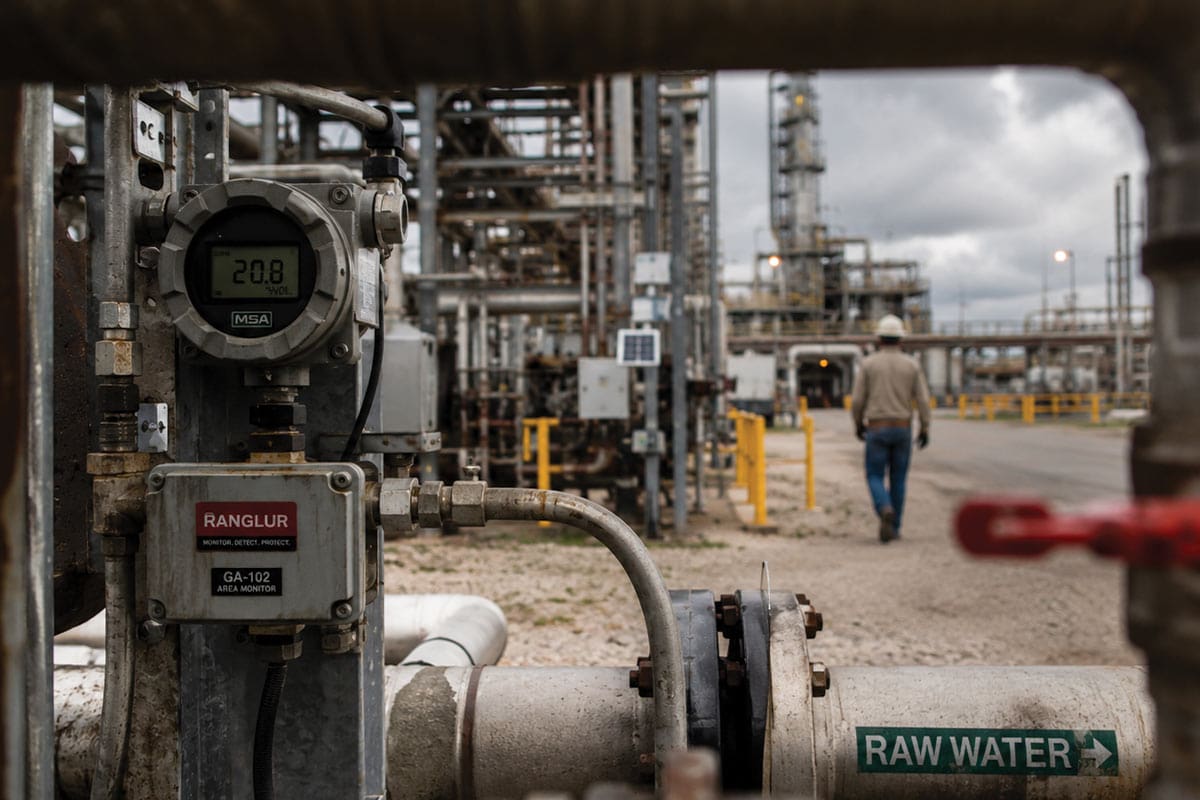
Facilities running hazardous materials carry an environmental exposure that behaves nothing like an intrusion. There’s no perimeter to watch. There’s a gauge, a sensor, a threshold, and a window that’s often measured in minutes.
This is where continuous monitoring matters more than reaction. A sensor that flags bad air quality before anyone smells it. A telemetry feed that catches a rising reading before it becomes a rupture. The facilities that get this right treat monitoring as the first layer of protection, not the last resort after something’s already gone wrong.
Q. How do I catch a chemical or gas leak before it becomes an emergency?
A. Through continuous monitoring, not a response plan. Sensors that flag abnormal readings early buy you minutes you won’t get if you wait to react.
Why Weather Risk Depends on What It Hits
Weather risk gets treated as generic, and that’s the mistake. Rain doesn’t threaten a retail floor the way it threatens a facility mid-process with something volatile in motion.
Picture a casting operation dropping a load of molten material right as high winds and rain move through. That kind of storm isn’t rare for this region. The real danger comes from what it hits mid-process, not the storm’s intensity.
The forecast alone doesn’t answer the real question. What matters is what that forecast means for what you’re doing right now, in this building, with this process. Facilities that get ahead of weather risk aren’t the ones with the best forecast. They’re the ones who’ve already mapped which conditions actually threaten their specific operation.
Q. Why does weather risk vary so much by facility?
A. Because the threat isn’t the storm, it’s what the storm interacts with. The same rain that’s harmless at a retail site can be dangerous mid-process at a manufacturing facility.
Why Treating These as Three Problems Creates a Fourth
Man-made, environmental, and weather risk get assigned to different people, different budgets, and different meetings. That’s what most facilities default to. It’s also the reason they stay exposed.
These threats overlap more than most facilities realize. A storm that knocks out power can disable the very monitoring system meant to catch an environmental failure. A distracted response to one event creates the opening for another. When the people managing each category don’t talk to each other, nobody owns the overlap, and the overlap is where the real damage happens.
There’s no universal answer for whether one person should own all three or whether three specialists should stay in close coordination. What’s certain is that treating them as unrelated is the wrong answer every time.
Most facilities still approach this as a security problem: cameras, a fence, a guard on shift. That’s incumbent thinking, and it’s exactly why the problem keeps getting missed. Protection isn’t a product you install once and forget about. It’s systems, combined into a platforms, working as a solution, you keep examining.
If you’re not sure where your facility actually stands across all three categories, a structured assessment like RANGEREADY is one way to find out before something forces the question. It’s a clear look at where you’re exposed and why, not a pitch to fix everything at once.
There’s no off-the-shelf version of this that fits every facility. Yours is bespoke because your operation is. The starting point isn’t more protection. It’s an accurate picture of what you’re actually protecting against.
Q. Should one person manage all of a facility’s protection risks, or should specialists split it up?
A. Either can work, but only if they communicate. The real danger isn’t the split, it’s a silo where nobody owns the overlap between categories.
Q. What’s the first step to reducing risk in an industrial facility?
A. Get an accurate picture of your exposure across man-made, environmental, and weather risk before deciding what to fix. A structured assessment like RANGEREADY is one way facilities do that.