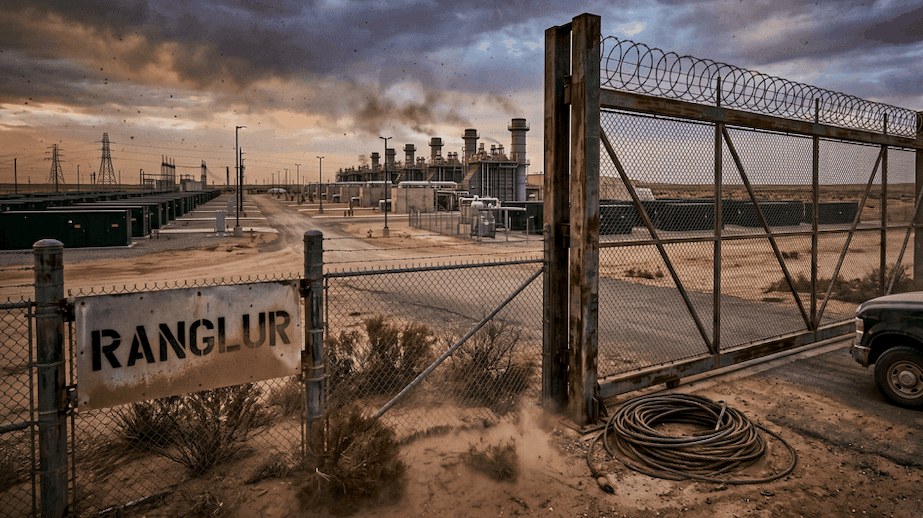
The biggest risk to a data center is not a hacker.
It’s the people in your orbit who never owned the physical protection.
West Texas now holds the benchmark. GW Ranch. 8,000 acres. 7.65 gigawatts. The largest permitted data center campus in the country.
Real. Massive. The kind of asset that reads as certainty.
Until it doesn’t.
Here is what is often observed after auditing these environments.
These sites get treated like buildings. Facilities. A line on a spreadsheet.
They are none of those things.
They are national assets. They hold brand, runtime, and the credibility that investors trust.
When something goes wrong, the threat rarely wins.
The missing structure wins. The missing governance. The unowned gap between “the servers are running” and “the business is protected.”
Protective Infrastructure closes that gap.
Before the incident. Not after.
Intelligence runs around the clock. Online and on the ground. Warning signs surface before they reach an executive’s dashboard.
Governance ties physical protection to board accountability.
Playbooks script the response long before a threat arrives.
Hardened access stops disruption the moment it starts.
This is RANGEREADY.
Not a security upgrade. A shift in how leaders protect what carries the weight.
Operational go-time. Realized value. Earned credibility.
Once physical protection becomes strategic, resilience stops being a goal. It becomes the default condition.
Below a certain scale, most will continue to believe this is unnecessary.
Past it, the gap is the exposure.
If a primary node failed tonight, would your protection hold the line, or would the boardroom learn it from the headlines?
Protection by Design, Not Chance